Daily sea ice, down to type and thickness.
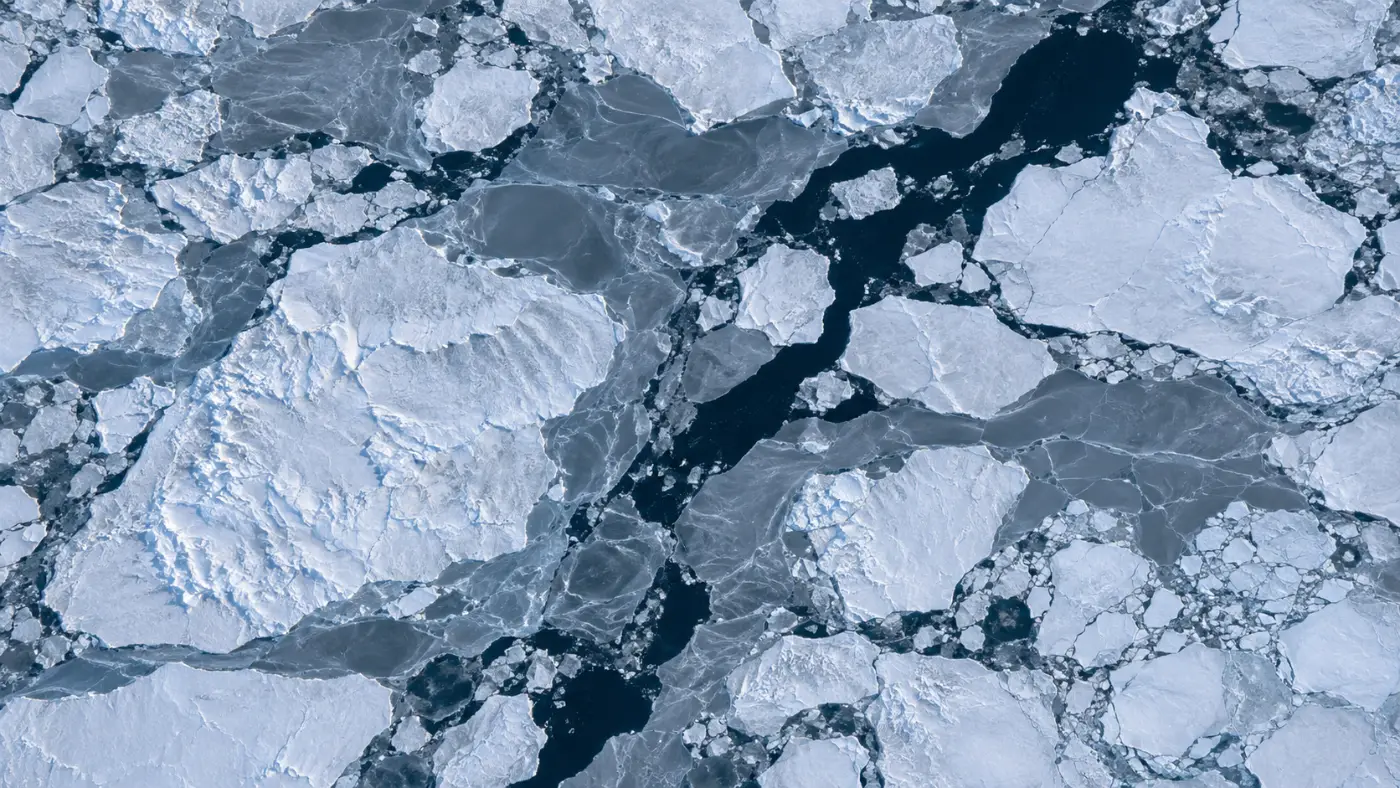
We ingest daily 6.25 km AMSR2 sea-ice concentration onto the route grid and estimate ice type and thickness from freezing degree days for the risk calculation.
Concentration
Microwaves see through cloud and polar night.
AMSR2 measures sea-ice concentration from the microwave contrast between ice and water. We sample the University of Bremen ASI product (6.25 km, daily) onto a 0.25°×0.5° route grid.
- Daily coverage regardless of cloud or polar night
- Ice edge from 15% to 100% concentration
- Hover to see concentration, ice type, thickness and RIO at any point
Thickness
Thickness from freezing degree days, corrected with real temperatures.
Concentration alone does not give thickness, so we estimate it from accumulated cold (freezing degree days).
Climatology + ERA5
Start from climatological freezing degree days and recompute points on the route with ERA5 temperatures (Open-Meteo).
Multi-year ice
Cells with at least 70% concentration on 15 September are treated as second-year or multi-year ice.
Flagged as a proxy
Thickness is an estimate and is labelled “proxy” on screen. We plan to compare it with field measurements in the PoC.
Trend
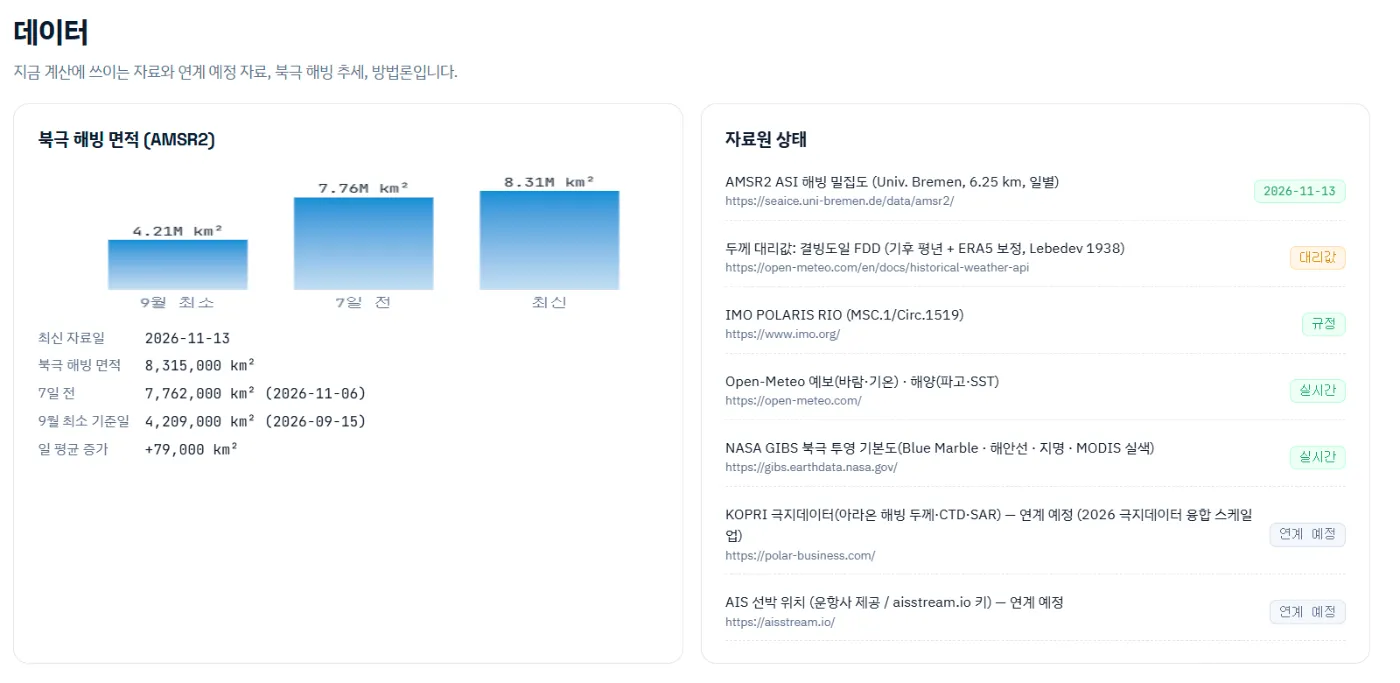
Arctic ice status at a glance.
The data screen shows the latest ice extent, the 7-day change and growth since the September minimum.
FAQ
Frequently asked questions
Why AMSR2?
It is a microwave sensor that sees the whole Arctic daily through cloud and polar night, which suits daily voyage planning.
How accurate is the thickness?
It is a proxy from a freezing-degree-day relation and can differ from real thickness. We plan to validate it against field data in the PoC, targeting a mean error of 20 cm or less.
Does it show icebergs?
No. 6.25 km concentration cannot resolve individual icebergs. Use official ice services for iceberg information.
Get started
Try it on your own fleet’s voyages.
We walk you through the demo account and run your planned voyage on the latest ice field.